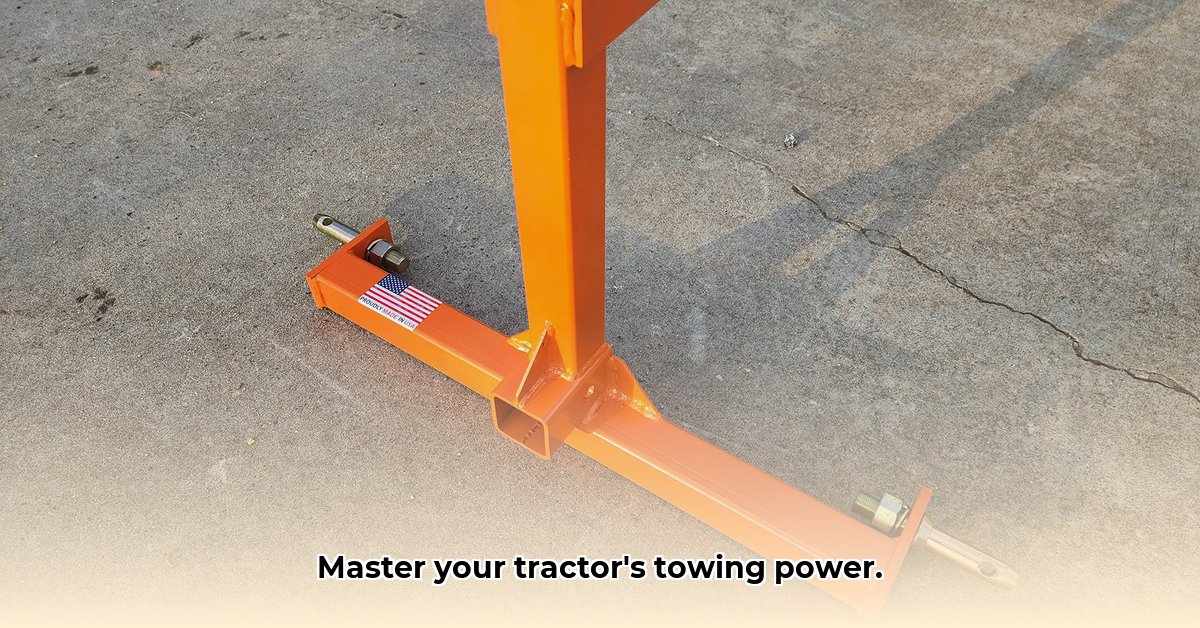
This comprehensive guide provides farmers and equipment operators with the actionable knowledge needed to select, install, maintain, and troubleshoot tractor drawbar receiver hitches. We'll focus on durable, US-manufactured hitches emphasizing compatibility with standard sizes for ease of use and implement interchangeability. For more detailed information, see our comprehensive guide on Hitch Selection.
Understanding Tractor Drawbar Receiver Hitches
A tractor drawbar receiver hitch is the crucial connection between your tractor and towed implements (e.g., plows, trailers, spreaders). Choosing, installing, and maintaining the right hitch ensures efficient and safe operation. Different hitches cater to varying tasks and tractor sizes; selecting the appropriate one prevents future problems.
Selecting the Right Hitch: Key Considerations
Several factors influence hitch selection:
Size and Weight Capacity: Standard sizes (Category 1, 2-inch receivers) offer broad compatibility. Heavy-duty hitches are crucial for heavier loads. Always check your tractor's manual for capacity limitations. Don't overload! What is the heaviest implement you'll tow? Selecting a hitch with a higher weight capacity than the heaviest item provides a crucial safety margin.
Durability and Material: Look for durable, high-quality steel construction. A powder-coated finish resists rust and extends the hitch's lifespan. Many farmers prefer the quality assurance of US-manufactured products to support domestic industry.
Ease of Use: A well-designed hitch simplifies hookup and detachment, saving valuable time. Consider the frequency with which you'll attach and detach implements. A more user-friendly hitch will pay dividends over time.
Installing Your Hitch: A Step-by-Step Guide
Always consult your tractor and hitch manuals for specific instructions. This is a general guideline:
Alignment: Carefully align the hitch with the tractor's drawbar mounting points. Ensure a snug fit.
Secure Connection: Use supplied bolts and washers to firmly attach the hitch. Use a torque wrench to ensure precise tightening according to manufacturer specifications. Improper tightening can lead to failure under load.
Inspection: Before operation, thoroughly inspect all connections for tightness and alignment. This is a critical safety precaution.
Safe Hitch Operation: Essential Tips
Weight Limits: Never exceed the weight limits of your tractor or hitch. Overloading is dangerous and can cause catastrophic failure.
Pre-Operation Inspection: Always inspect the hitch and its connections before each use. Check for damage or loose parts. A quick visual inspection can save you both time and money in the long run.
Secure Connections: Always double-check that the hitch is properly connected to the implement before movement.
Cautious Operation: Exercise caution during sharp turns or operation on uneven terrain.
Hitch Maintenance: Best Practices
Regular maintenance extends the hitch's life and ensures efficient operation.
Post-Use Cleaning: After each use, clean the hitch of mud, dirt, and debris to prevent corrosion.
Lubrication: Lubricate moving parts to reduce wear and maintain smooth operation.
Regular Inspections: Check for wear and tear. Replace any worn or damaged parts immediately.
Preventative Maintenance: Regular inspection significantly reduces the need for costly repairs.
Troubleshooting Common Hitch Problems
If you encounter issues, systematically check the following:
Connections: Ensure all bolts are securely tightened.
Hitch Condition: Inspect for any bending, breakage, or other damage.
Manuals/Professional Help: Consult your hitch manual or contact a qualified mechanic.
Hitch Compatibility: Size and Weight Guide
This table provides a general guideline. Consult your tractor and implement manuals for precise compatibility information.
| Tractor Category | Receiver Size (inches) | Hitch Type | Approximate Implement Weight (lbs) |
|---|---|---|---|
| Category 1 | 1.75 - 2 | Light Duty | Up to 500 |
| Category 2 | 2 | Medium Duty | 500 - 2000 |
| Category 3 | 2.5 - 3 | Heavy Duty | 2000+ |
Remember, choosing and maintaining the right hitch improves safety and efficiency. Always prioritize safety and consult your equipment manuals for specific instructions and operational limits.